
Natural Delivery
Updated: Jun 6
A mother endures nine months of pregnancy just to hold her newborn after delivery. Delivery depends on the condition of the expectant mother and child. Natural birth and C-sections are the most common types of delivery.
What is a Natural Delivery?
Natural delivery is the process of giving birth to a child without any medical interventions throughout labour and delivery. The baby is delivered head-first through the vagina in the presence of a medical professional who checks on both the mother and the child’s health.
Nowadays, medication is given to the mother to alleviate the pain and quicken the labour process. In natural delivery, techniques are used, such as controlled breathing for the pain.
Giving birth naturally means allowing nature to take its course. That means
-
delivering a baby without the aid of any medications, including painkillers
-
using minimal or no artificial medical procedures
-
allowing the mother to take control of the labour and delivery process and handle it however she feels most comfortable in the presence of the doctor
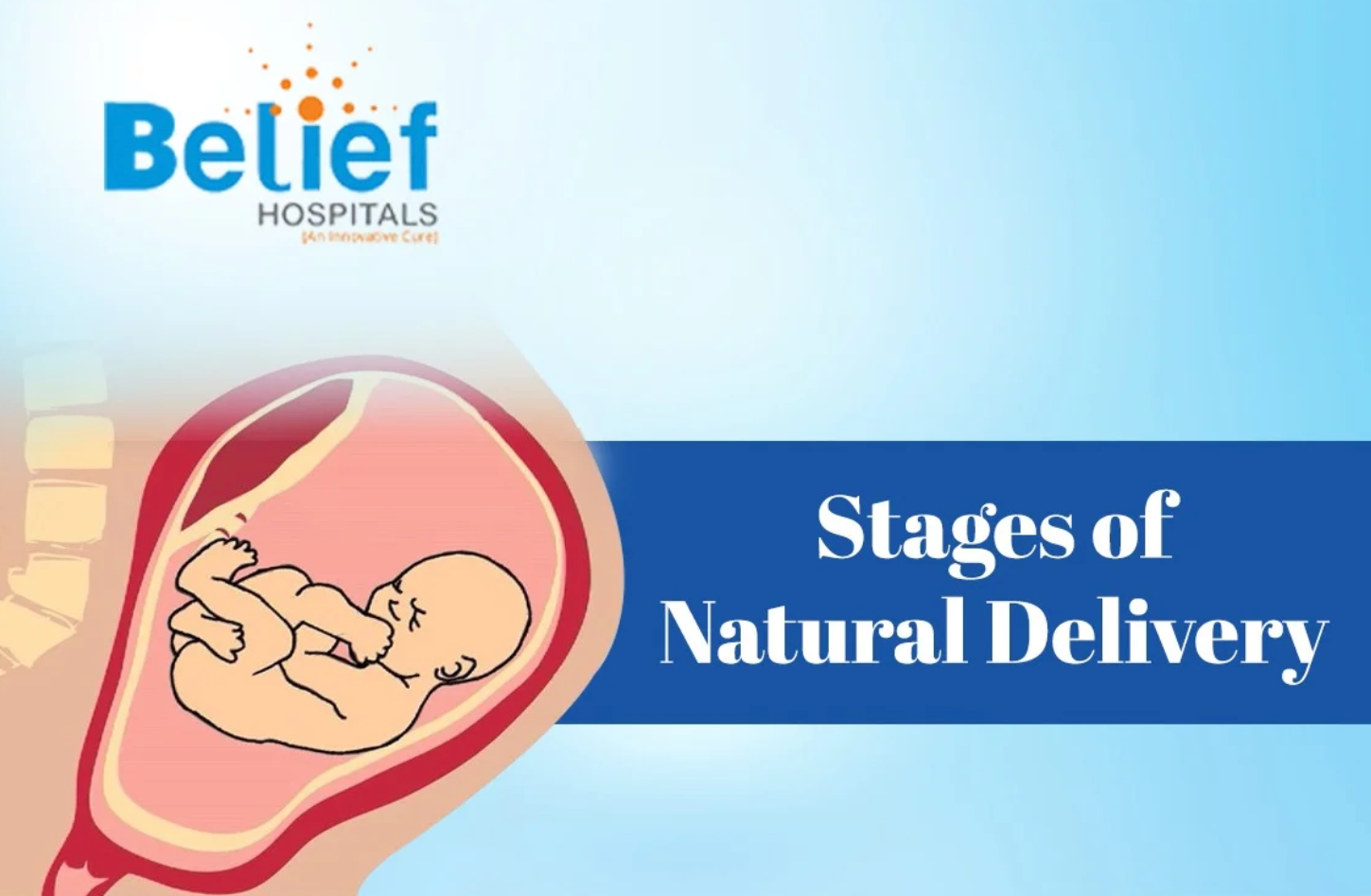
Stages of Natural Delivery

Stages of natural delivery
-
Labour
The mother experiences contractions in the first stage. These contractions assist in widening and softening the cervix so that the baby can be delivered. When a woman gives birth for the first time, this stage can last up to 13 hours, and it lasts roughly 7-8 hours for subsequent deliveries.
This first stage has three sub-stages:
-
Early Labour: The contractions start to kick in at an interval of every 3-5 minutes. Early labour can be completed at home by the mother. The doctor should be informed, though.
For comfortable early labour, the mother can:
-
Go for a long walk
-
Take a shower
-
Try relaxation breathing techniques
-
Listen to soothing music
-
Change positions
-
Active Labour: In this phase, the contractions become stronger and more frequent. The water breaks during this and the mother must be taken to the hospital. The contractions last for about a minute and recur every 3–4 minutes. The mother might face cramps in her legs.
2. The birth of your baby
This phase starts once the cervix has fully dilated. The baby is being pushed head first down the birth canal as a result of continuing, strong contractions. Every contraction requires the mother to push, and she may become extremely exhausted. As the baby exits, she could also feel severe discomfort near the vaginal opening. At this point, the doctor may choose to perform an episiotomy to expand the vaginal opening and facilitate the baby’s smoother emergence. The mother must keep pushing until the baby is finally able to leave the womb.
3. Removal of Placenta
A placenta is an organ that is developed on the wall of the uterus. It provides oxygen and nutrients to the baby while growing inside the womb. Placenta removal is also called “afterbirth”. After the baby is born, the placenta may be delivered anywhere between a few minutes and 30 minutes later. To reduce the bleeding, the lower abdomen is massaged.
Benefits of Natural Delivery:

Benefits of natural delivery
-
Decreased risk of illness for both mother and child
-
Faster mother’s recovery and shorter hospital stay (24-48 hours as compared to 3 days to a week post caesarean)
-
The baby’s immune system is strengthened by the natural bacteria and germs of the vagina that are passed from mother to kid, preparing it for life outside the safe womb.
-
Because giving birth activates several natural mothering hormones, a normal delivery encourages nursing.
Tips for expectant mothers:
-
Eat healthy
-
Exercise regularly
-
Reduce stress
-
Get enough sleep
-
Stay hydrated